
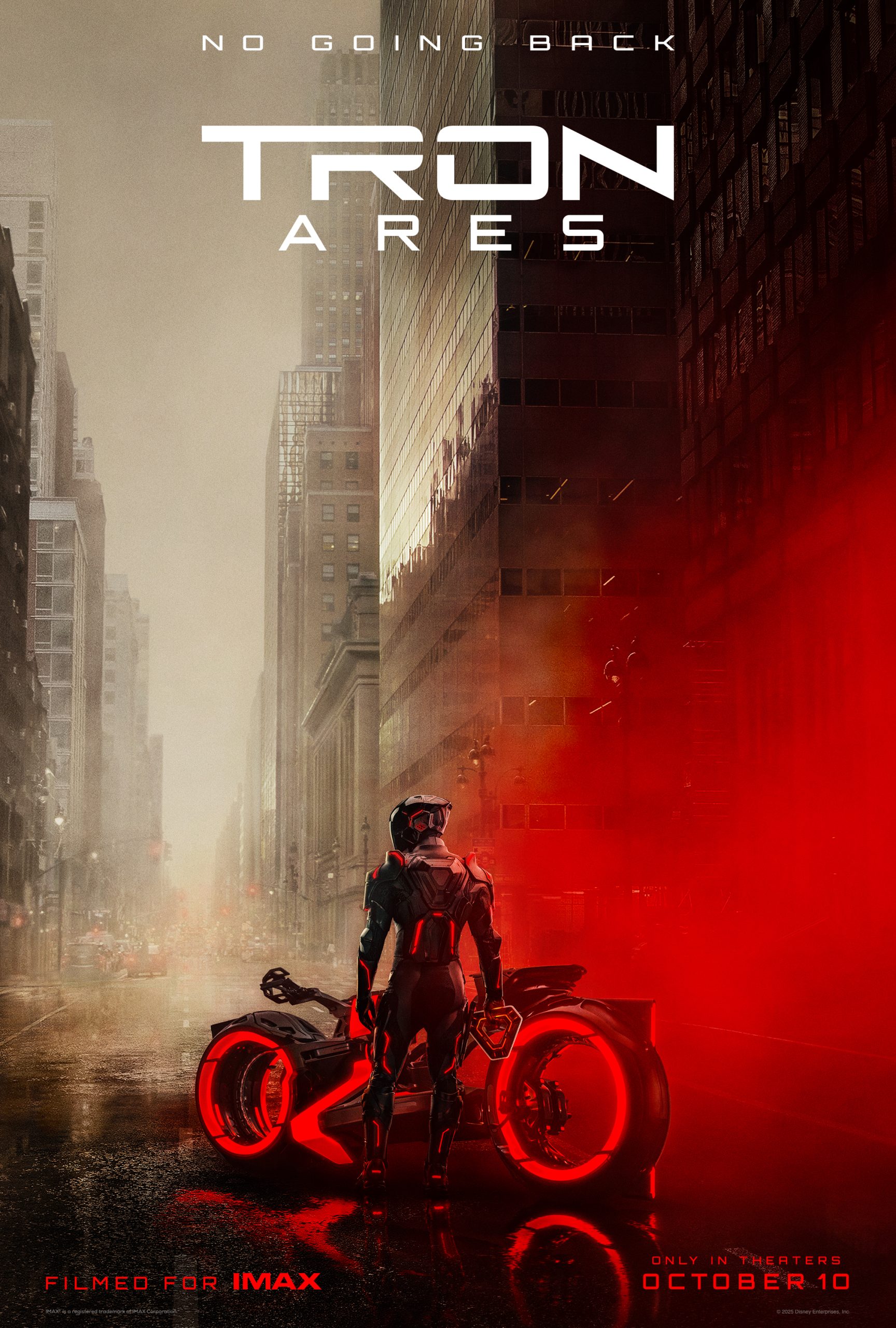
 Having been a 43-year fan of everything Tron—the 1982 original, its 2010 sequel (even though I still stand by the middling grade I gave it back then), the video games, the soundtrack albums, and everything having to do with the Light Cycles and Identity Disks—I approached Tron: Ares with a little trepidation. Why now? It took them 28 years to make an okay sequel, and they didn’t do anything after 2010 for another 15 years? They must have been waiting for something truly special to come along—a story, more groundbreaking computer wizardry, the actors to clear their schedules—all of this and none of it, maybe? Nope… they waited until they got it right.
Tron: Ares is a visually astounding sequel that uses its running time to reacquaint us with the real and computer worlds that make up the film’s universe, the visual language that ties everything together, and the characters inhabiting this reality in the ongoing battle of good vs. evil. However, this installment turns almost 180° away from being completely grounded in the computer world, where both Tron and Tron: Legacy spent much of their runtimes. We’re in the real world now, and the future of AI is in the hands of two major players: Julian Dillinger (Evan Peters) and Eve Kim (Greta Lee), the respective CEOs of Dillinger Systems and ENCOM, the latter being the firm where Kevin Flynn (Jeff Bridges) made remarkable discoveries about the computer world.
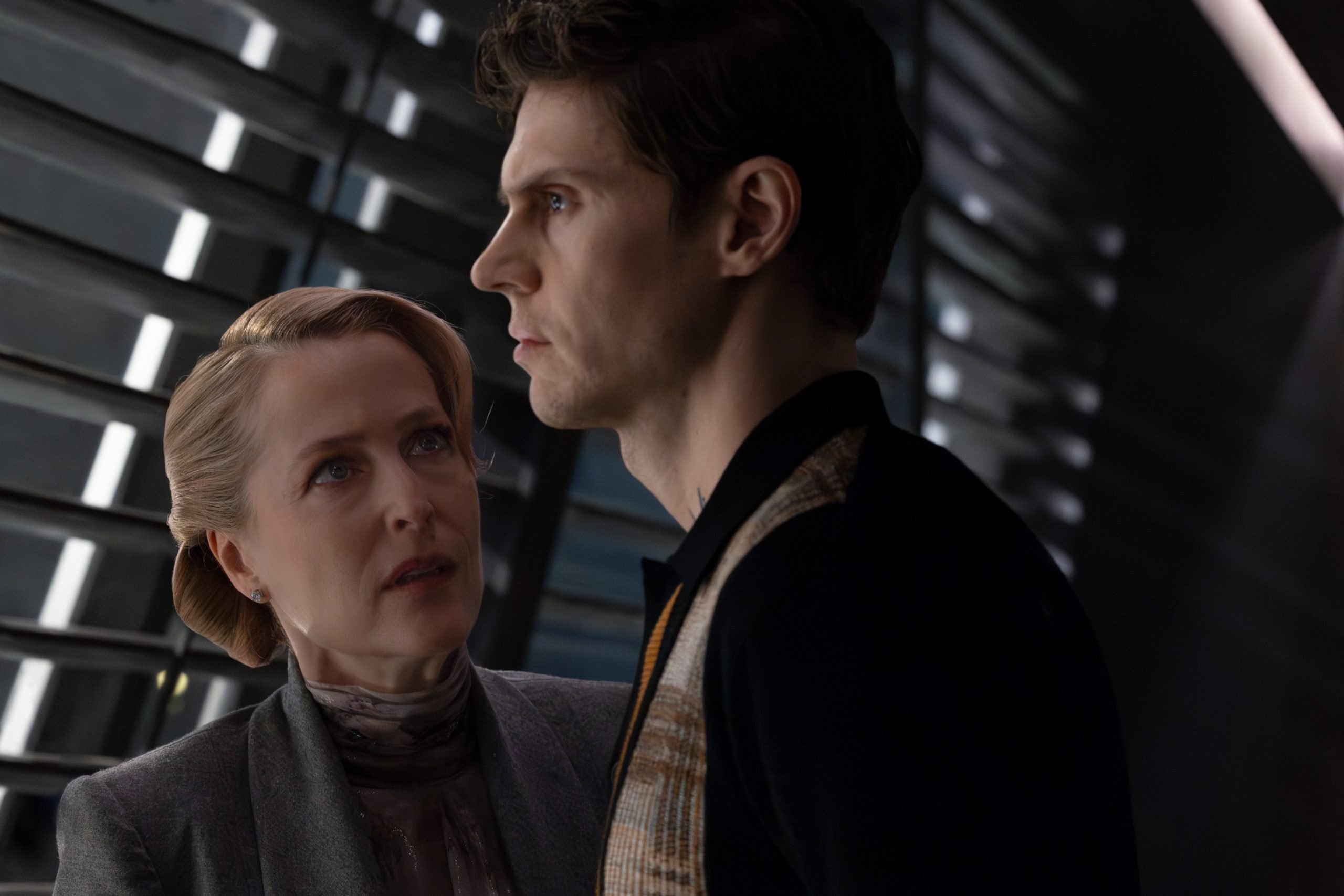 For the first part, Tron: Ares reads a bit like Sam Raimi’s 1990 cult classic, Darkman, where a scientist struggles to create synthetic skin that lasts longer than 99 minutes. Here, Julian has access to technology that can create anything from nothing; his latest pitch to the Dillinger Systems board members is Ares (Jared Leto), an AI program made corporeal and given quick wits, cutting-edge battle systems, and unmatched strength. In essence, the perfect warrior. And if it’s destroyed, a new one can be laser-printed and deployed in seconds. Here’s the rub: These fabrications—whether they’re humanoid or machine—only last 28 minutes in the real world. And Julian hasn’t told the board.
Just like his grandfather Edward (the late David Warner, appearing via artwork and archival photos), he’s taking shortcuts, making deception part of his work ethic, much to his mother Elisabeth’s (Gillian Anderson) disapproval. Elisabeth wants Dillinger Systems to be on the up-and-up, and that’s not going to happen with Julian’s lack of morals. From her exasperation, we can tell Julian’s been a thorn in her side, especially after seeing her reaction to his leaving the board in the dark regarding the 28-minute limit. He’s the Big Bad, capitalistic evil incarnate, willing to do whatever it takes to maintain his position at the top of the mountain, a position he’s unwilling to share.
 Nearing the top of the same mountain is the more benevolent Eve Kim (Greta Lee), who’s looking to do the same thing with her lasers, but with a more humanitarian aim. ENCOM, still famous for the video games seen in the first film, is trying to close the hunger gap, creating sustainable food out of computer programs. But there’s something everyone’s missing: the permanence code—a line of computer code that could make these dreams of theirs last past 28 minutes. And it’s somewhere in ENCOM’s servers, hidden like a needle in a haystack, and it’s just a waiting game to see if Eve finds it and what Julian’s going to do about it. (Narrator: Julian goes apeshit.)
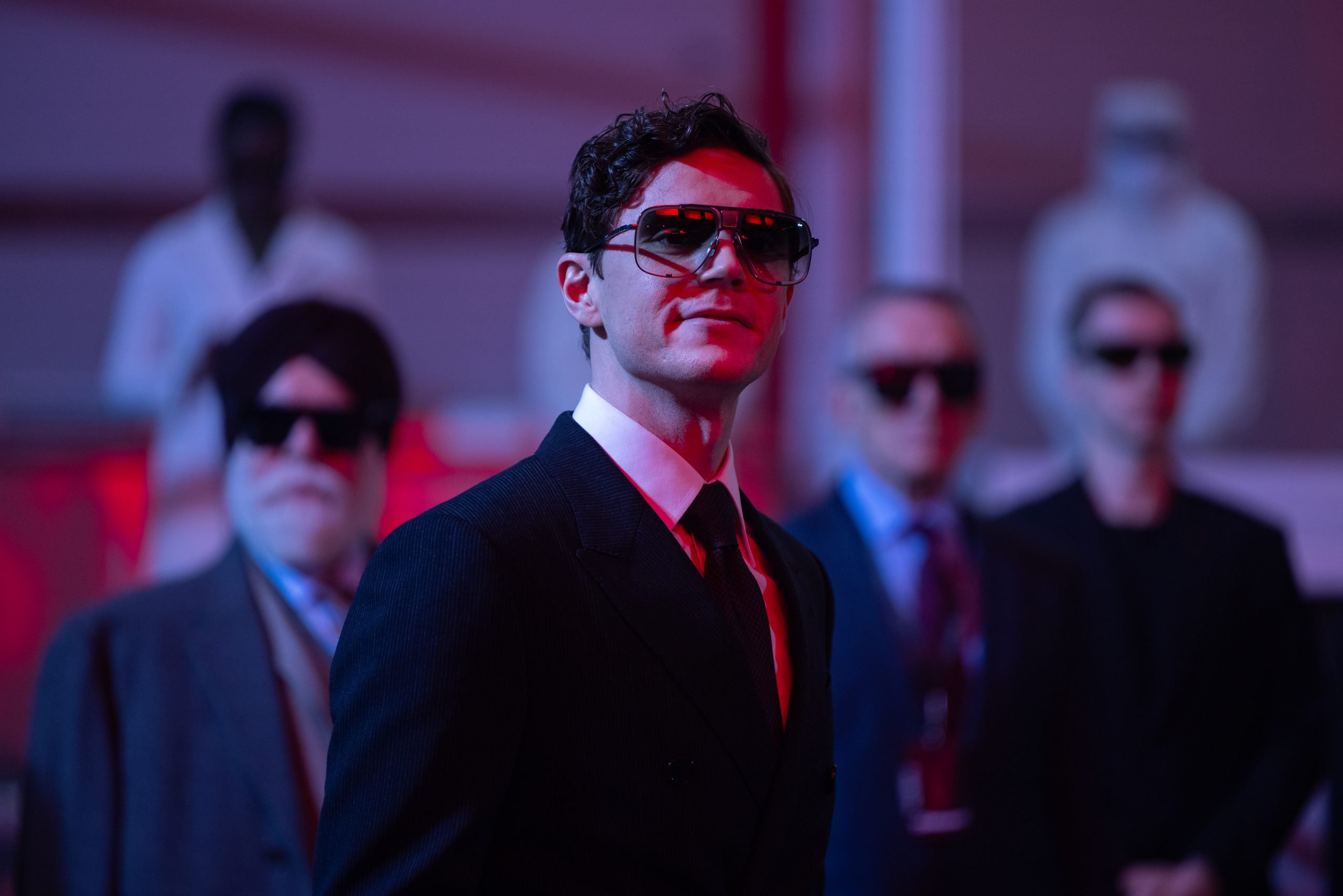
The first half of Tron: Ares defines our heroes and villains with clarity and purpose. Our sympathies are automatically with Eve, having lost her sister and co-CEO Tess (Selene Yun) to cancer; when we first meet Eve, we see she’s continuing the search for the permanence code that Tess began. Julian’s every modern negative image of the wealthy and powerful in America, so it’s easy to dislike him. He doesn’t start out that way, though, having a little bit of Robert Downey Jr.’s Tony Stark strut and magnetism; however, with each passing moment, that façade wears down until we see the desperation set in while he hacks ENCOM’s systems.
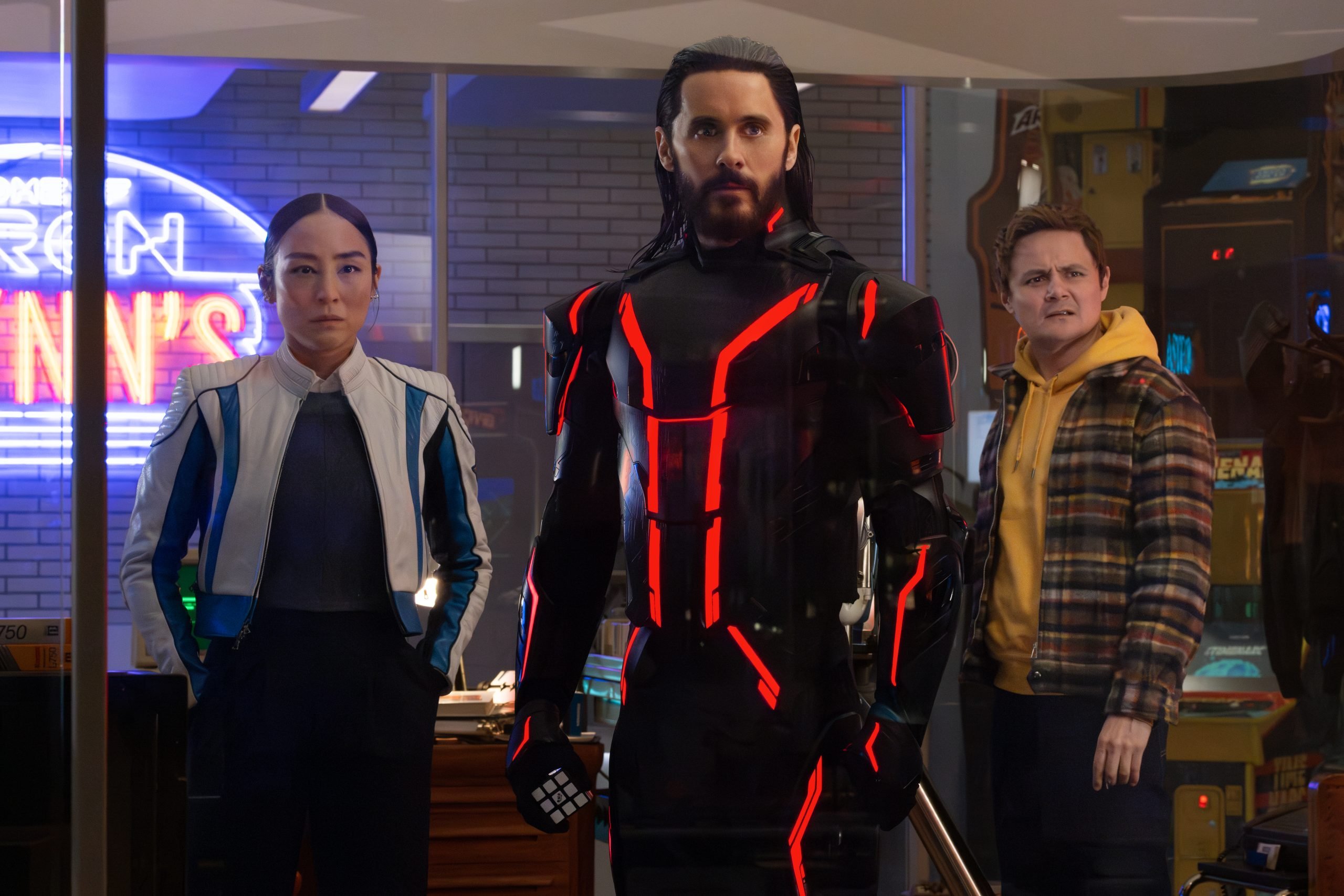 Caught between both is Ares, a computer program—remember, in the Tron world, programs are essentially people, just with armor and hella cool transport devices—who, in his limited corporeal existence, gets entranced with humanity upon arriving in the real world. He makes a deal to protect Eve, who’s been targeted for termination, in exchange for permanence—he wants to be a real boy, reversing the original Tron’s body transfer from the real world to the computer world. Jared Leto plays Ares with a striking combination of neutrality and curiosity, and it’s a performance that gets its hooks into you, alternately scaring you with Ares’ cold and calculating nature and making you laugh with his observations about human nature and nature itself.
Director Joachim Rønning stays true to both of this film’s predecessors, in that all of them are chase flicks at their cores. While the first was more chill with its action and the second wove action and drama together, Tron: Ares is a full-on, gargantuan blast. Rønning sets all the conflicts up with deft ease in the first act before wowing us with a constant chase that lasts for the remainder of the film. From a watercraft pursuit in the computer world to a bevy of car chases, plane dogfights, and foot races, the action entertains with bombastic sound and visual fury.
 Visually, the computer animation is utterly seamless and more photorealistic than similar films I’ve seen over the last 15 years. Each bit that comprises a computer being or construct feels tangible, and I found myself ducking the solid trails left behind by the Light Cycles and the programs’ aircraft several times. Whether it’s the smallest detail in a computer-fabricated orange tree or the updated Recognizer that destroys a ton of skyscrapers in the final act, the film’s visuals deliver in such a way that I didn’t think I was watching a video game; instead, I felt I was watching real life being invaded. The CGI is part of the story, but it’s not the story; first and foremost, Rønning and writer Jesse Wigutow cleverly attach us to the human and humanoid figures, creating the need for these constructs out of the conflict, not the other way around.
When we see the computer world, we know we’re in it—there’s no way around it—but we don’t get to hang out around there long enough for us to tune our brains out of the CGI, thus deadening our expectations. By this, I mean that since anything can happen in the computer world, we just take things for granted. However, each scene in the computer world necessitates an escape or return to the real world, and these exit ramps are taken with grace and speed. Rønning knows that the film’s excitement lies in programs crossing over into our existence, so these scenes are kept short and purposeful—even the scene the die-hard fans are looking forward to the most.
 Tron: Ares was made with obvious respect for its predecessors; you’ll see and hear little nods here and there (even Dumont gets a mention!), along with bigger, more obvious elements. It’s a good mix of past, present, and future, all coming together to explode with vigor and delight. Joachim Rønning has made an exceptional chase film, one that should be seen on a large screen to appreciate the work that’s gone into making every CGI shot look gorgeous and natural. It’s a thrilling sequel that upholds the vibe of the 1982 original, still venturing into the unknown… just on our side of the computer monitor and the particle laser.
P.S. One thing bothers me, though: Tron’s name is over top of Ares’ name in the title, but where the hell is he?
