
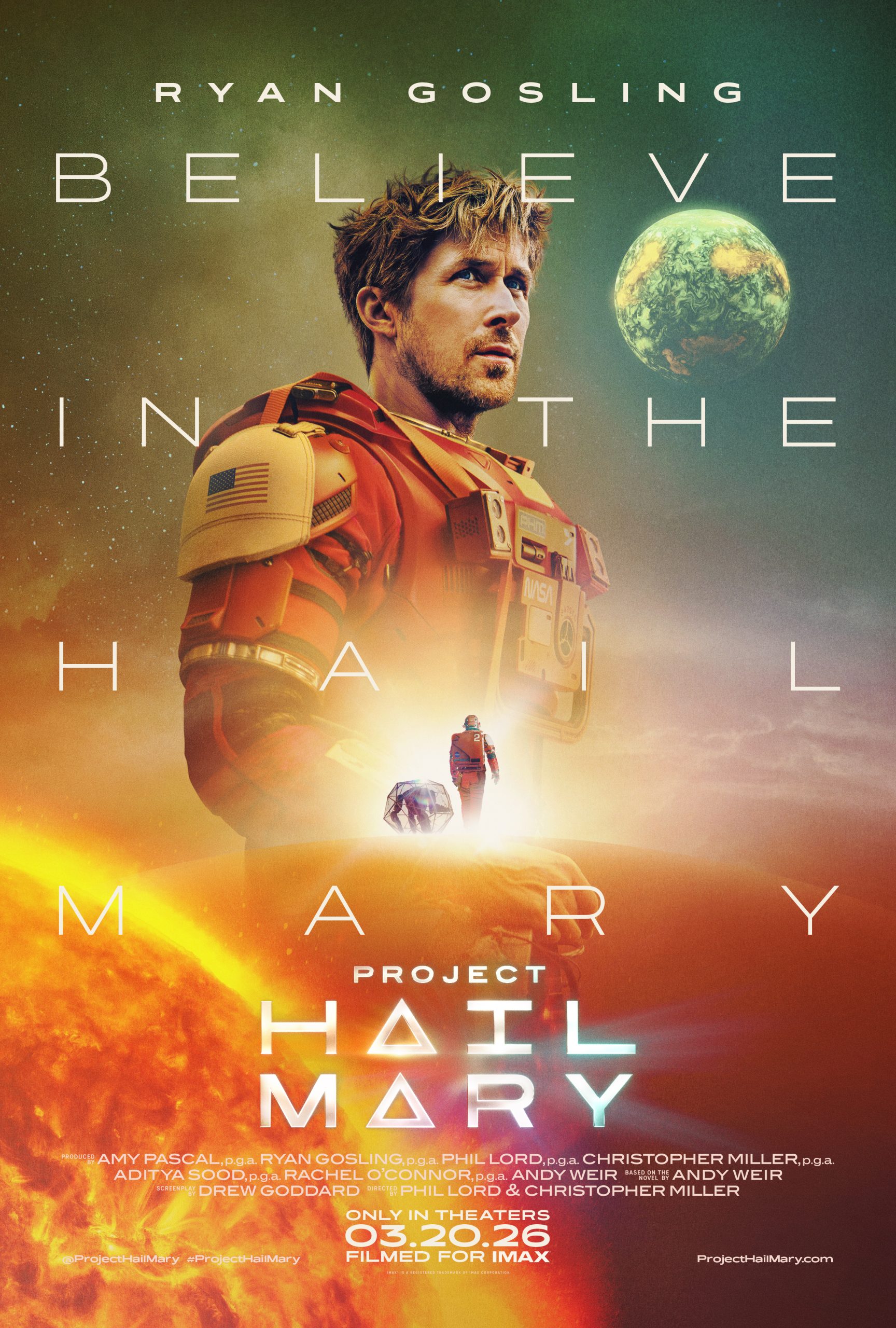
 How would you feel if you suddenly woke up in a strange bag of some kind with medical tubing sticking out of your body, then you find out that you’re light-years away from Earth and everyone around you is dead? Worse, you have no idea who you are, where you are, how you got there, or what the hell you’re supposed to be doing. This is how Phil Lord and Christopher Miller’s adaptation of Andy Weir’s novel Project Hail Mary begins, and the script by Drew Goddard (who also adapted Weir’s The Martian for Ridley Scott) stays faithful to its source material in form, spirit, and brilliance.
Much like The Martian, Project Hail Mary likewise sets its focus on a lone spacefarer caught in adverse circumstances who uses science and smarts to survive. Here, science teacher Ryland Grace (Ryan Gosling) is the last survivor of the titular Project Hail Mary, a mission undertaken because of the unexpected dimming of our Sun due to a microorganism dubbed “Astrophage” eating away at it. Along with a pilot and an engineer (now deceased), Grace is on his way to Tau Ceti, a star light-years away from Earth, to observe and report on this star’s resistance to Astrophage in hopes that the folks back home can replicate similar results.
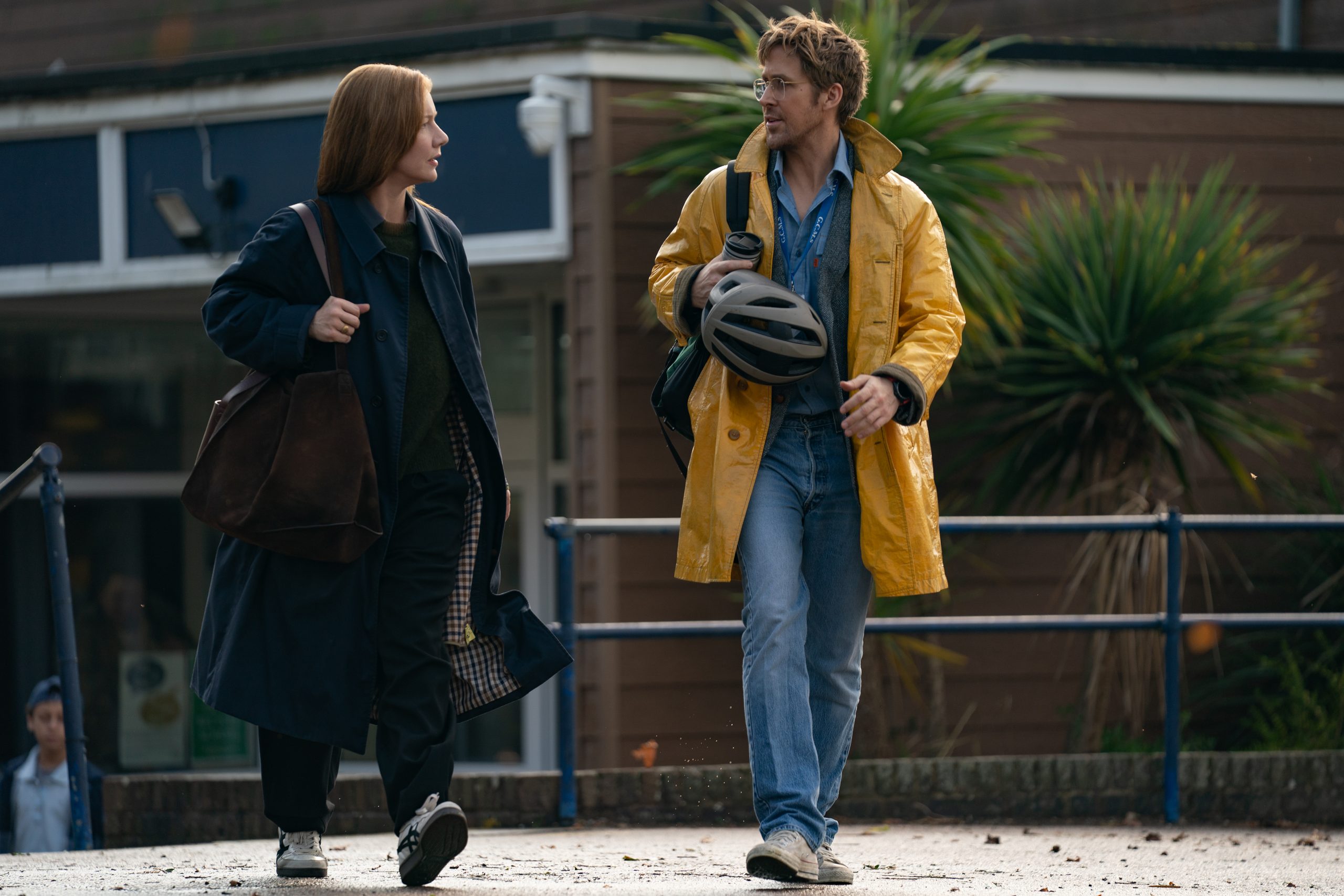 The film jumps between the present and flashbacks as Grace continues to recover his memory, with both eras visually defined by their framing—in non-IMAX presentations, the space scenes are shown at a more open 1.85:1 aspect ratio while flashbacks are letterboxed at 2.40:1. (I could also swear that the flashback footage is ever so slightly desaturated, compounding how we’re to take these aspect ratio shifts; conversely, I could be very wrong about that.) Although the film starts as a one-hander with Grace by himself in the spacecraft, these flashbacks detail how he came to be in said spacecraft, from being recruited by mysterious government agent Eva Stratt (Sandra Hüller) to his eventual classified involvement in a global task force to save the solar system.
These flashback scenes—and the rest of the film, as well—highlight Grace’s good nature and inquisitiveness, which Ryan Gosling plays with his patented charm. He gives Grace a boyish, impish esprit that, if used as a power source, could light up New York City for weeks. In tandem with Goddard’s easy-breezy script and Lord and Miller’s usual deft, comedic directorial style, Gosling helps this film go down smoother than 30-year-old Scotch. He has a Herculean task of keeping us consistently and constantly interested in everything he’s doing, whether it’s performing experiments and getting security mook Carl (Lionel Boyce) to get involved, or rigging up a communication device to translate his newfound alien friend Rocky’s (James Ortiz) language.
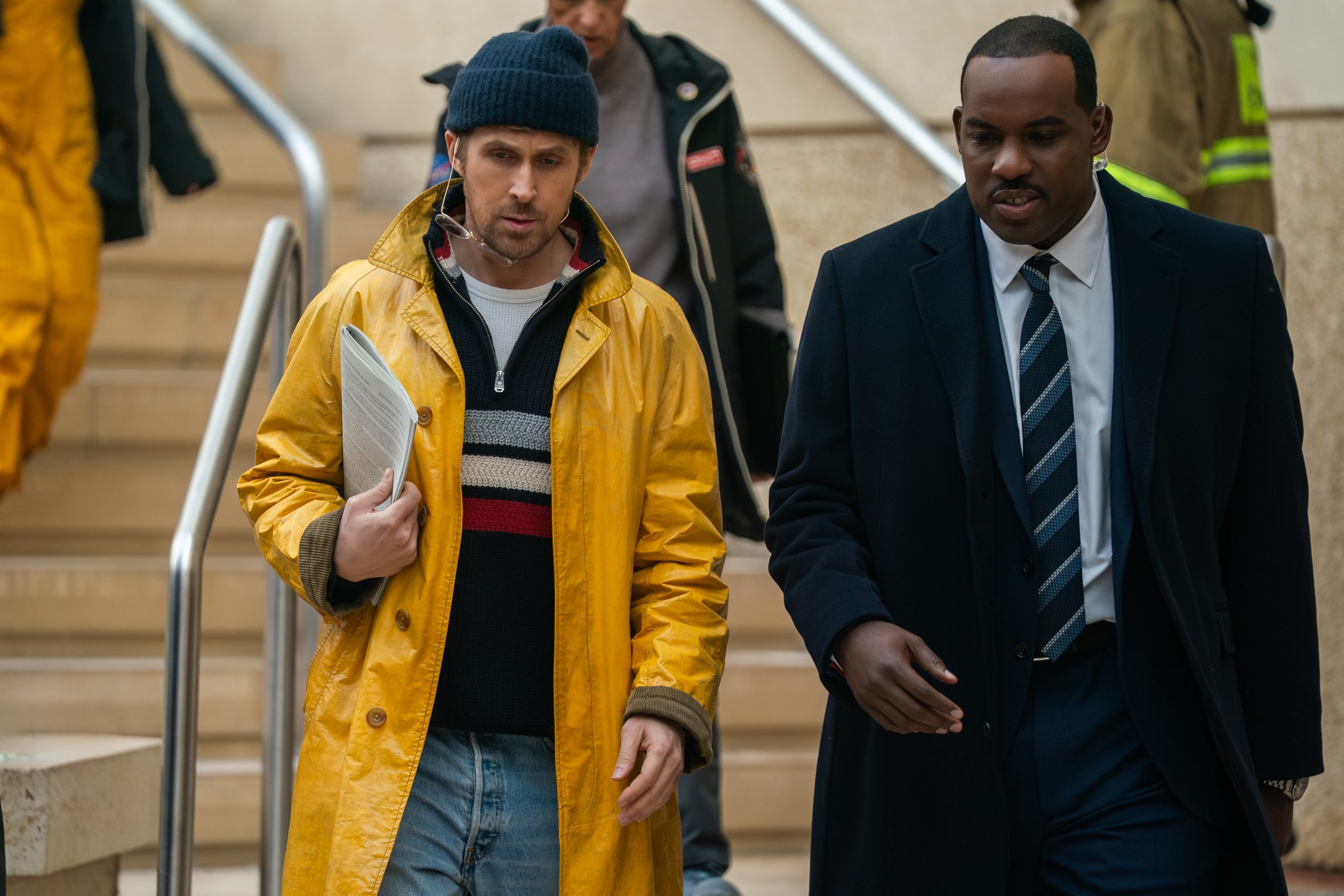 Oh, yeah—there’s a rock-like being who’s in the same situation as Grace, having been sent to Tau Ceti and being the only remaining member of his crew. There’s a magic that happens when Grace and Rocky first come together; they seem to be kindred curious spirits, extending hands of welcome instead of hostility. Once Rocky enters the picture, Project Hail Mary takes off in ways that defy expectations as their initial working relationship becomes an irresistible friendship. James Ortiz’s voice acting helps this friendship go the distance, guiding Rocky through attempts at grasping English—his translation of “fist bump” and other bon mots provides a decent runway for guffaws—and skillfully conveying emotion through computer-generated monotone, which isn’t easy.
This film is an absolute, undisputed joy. Lord and Miller know how to get things moving without a need for speed, which fits the languorousness of time spent in space with not much else to do than prepare for whatever comes next. Urgency is present, but it’s understated by the semi-comedic tones of the flashbacks and the buddy dynamic formed by Grace and Rocky. Goddard’s screenplay balances the stakes with heartfelt moments and laugh-out-loud wit, but there’s a wondrous humanity threaded throughout that stands up and shows itself in the face of planetary extinction. There’s not really any unpleasantness, save for one or two scenes that are part of Goddard’s careful balance; these scenes are cruel, but not for any wanton purpose. It’s because they must be, for the sake of the goodwill that Grace and Rocky give to each other and the audience.
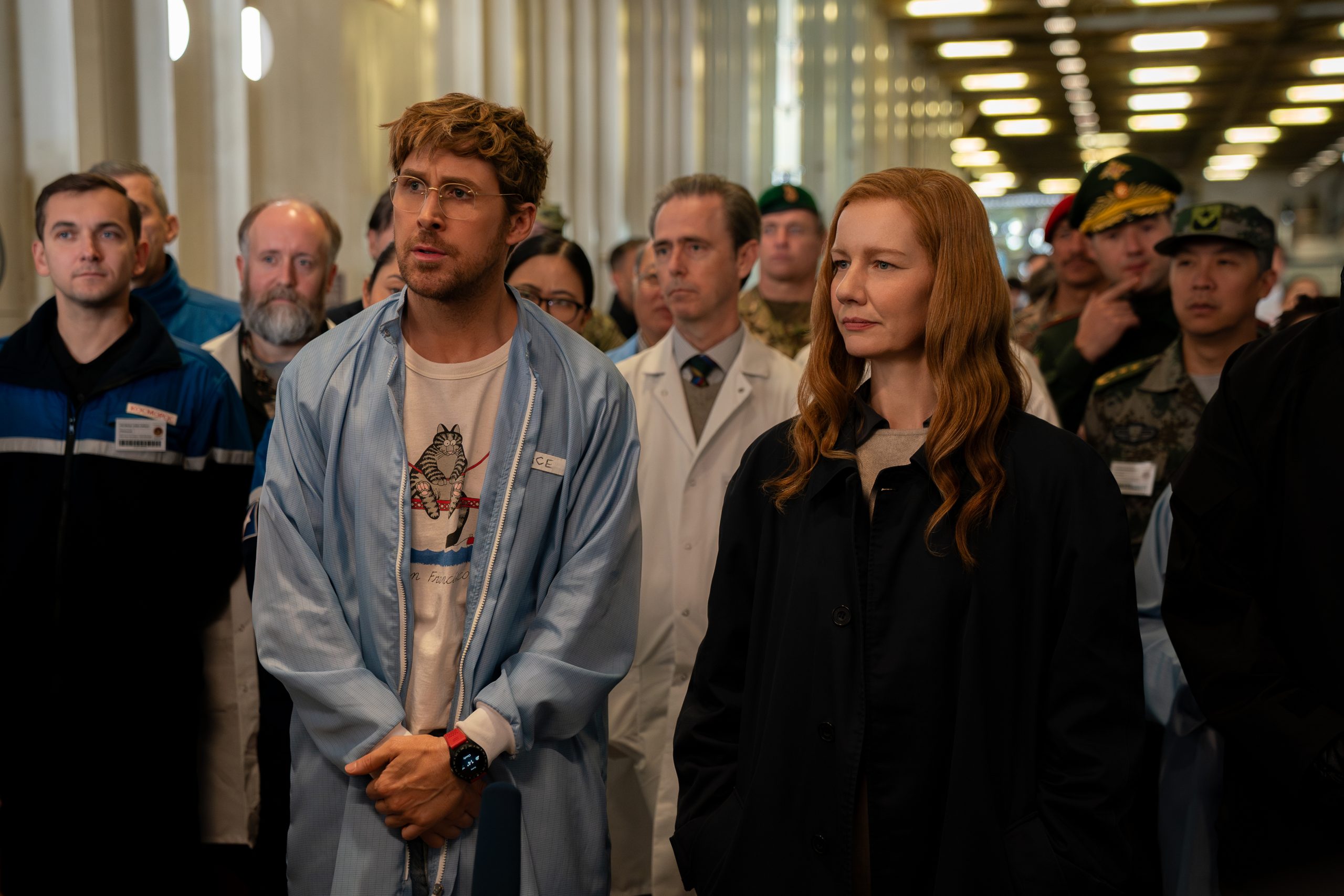 It’s crazy to even think that this early in the year, I’d give two five-star reviews in a row. But here we are, and Project Hail Mary has lodged itself in my “favorites of 2026” list. Its effervescent and magnetic identity is solid from the beginning, and it has the good sense to stay that way. Each element, from everything visual on down to the smallest of sound effects and editing tweaks, works perfectly in concert with the others, reflecting the film’s theme of partnership. Nothing’s overdone or undercooked; it is exactly as it should be, and there’s something about a film that doesn’t try to become something it isn’t. We’re watching two beings trying to save their respective homes, a situation that they’re both forced into, but nothing feels forced about their journey and their friendship; Project Hail Mary asks us to make home in our hearts for both of them, and it’s all too easy to do so.
