
 Danny Boyle has never been one to take the path of least resistance or to do anything the same way twice. For T2 Trainspotting, the sequel to his breakout film Trainspotting (which had a small tie to his debut feature, Shallow Grave), he wasn’t content with a mere rehash of its four leads getting back on the horse (yes, that’s a heroin joke). Instead, he refocused on their lives in the present and how all of it clashes with their (and our) perceptions of themselves. Boyle finds meaningful and often devastating ways to showcase our humanity through failures and triumphs in every movie, from the backstabbing frenemies of Shallow Grave up to and including 28 Years Later, the first of a new sequel trilogy stemming from to his 2002 arthouse horror film 28 Days Later and its 2007 follow-up, 28 Weeks Later.
In the TV show Firefly, Shepherd Book quotes a fictional philosopher: “Live with a man forty years. Share his house, his meals, speak on every subject. Then tie him up and hold him over the volcano’s edge, and on that day, you will finally meet the man.” Via the horror device of a cataclysmic virus capable of infection in mere seconds, these films exemplify this concept, pushing their subjects up to and past their breaking points to define them as heroes, villains, or something in between. The first two films, 28 Days Later and 28 Weeks Later, were small-scale and large-scale looks at a populace succumbing by the minute to the Rage Virus, which turns its victims into bloodthirsty cannibals. Boyle is loath to call them zombies; rather, they’re a reflection of humans as a whole, turning away from wisdom (the virus is spread in the first movie because no one listens to the smart guy in the room) and mobbing up on those who fight back.
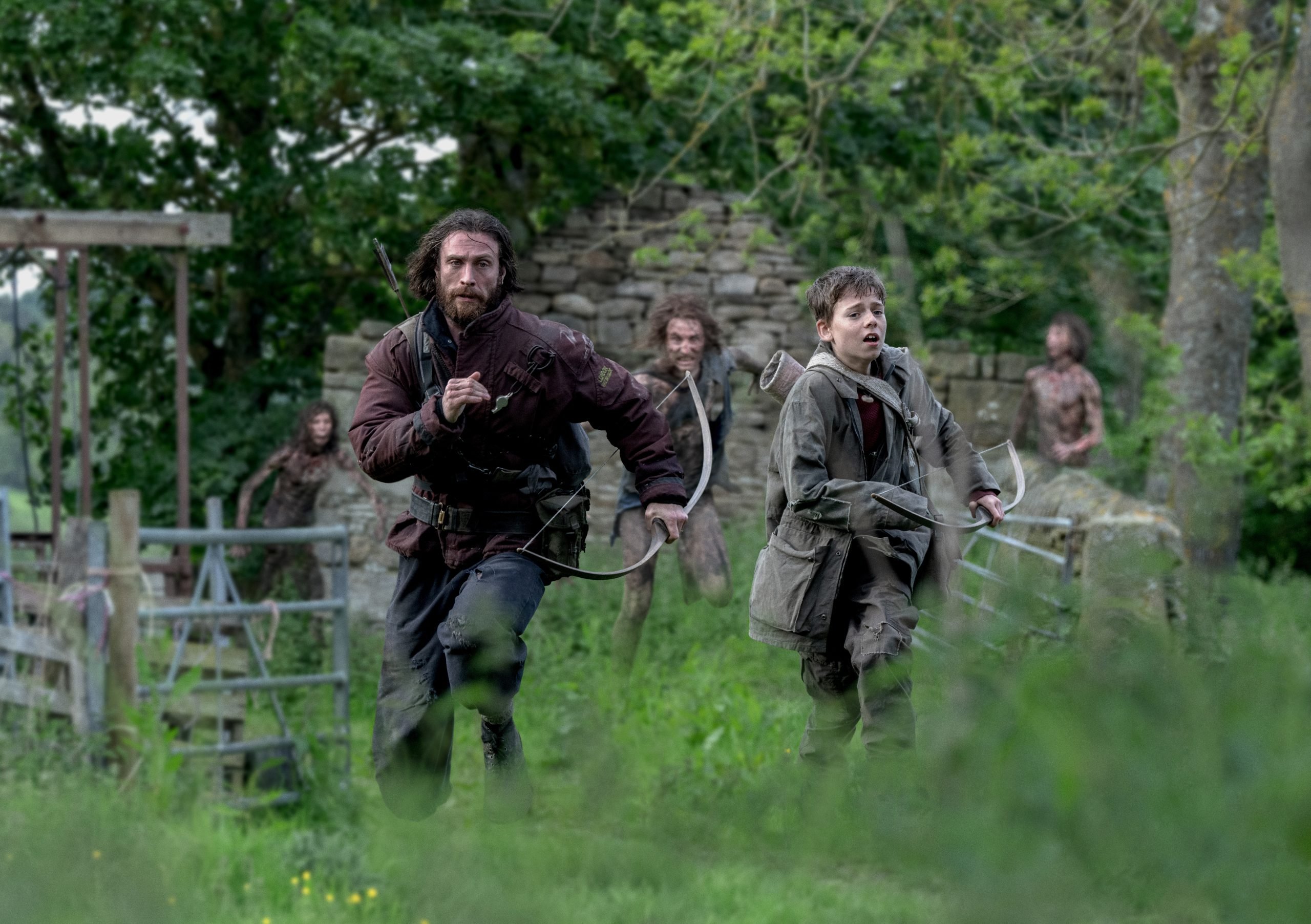 23 years after the first film burrowed its way into horror movie legend, Boyle revisits his vision of a deserted UK, overrun by the infected and forcing the remaining survivors to kill or be killed. The entirety of the UK has been quarantined—a measure taken after the virus briefly spread to mainland Europe—and naval ships from other countries run constant patrols to ensure no one gets out. Similar to the dystopia found in AMC’s The Walking Dead, little pockets of humanity have survived, ranging from the calm and agrarian to the solitary to those willingly and wantonly engaging with the infected with gleeful violence. If we were to think about these three films in terms of the Kübler-Ross Model, 28 Years Later would be at the Acceptance stage, as this film’s inhabitants have found a way to survive without modern conveniences amid the threat of the infected lurking just outside their safe zone.
While the film’s prologue reacquaints us with the brutality of the infected, don’t expect the adrenaline rushes and scares of the preceding films; 28 Years Later is a completely different animal, narrowing its focus to a 12-year-old boy, his family, and their island village’s rite of passage signifying the turn from boy to man. As the opening title tells us, we’re transported 28 years into the present, where Spike (Alfie Williams) is waking up on the day he’s being taken by his father, Jamie (Aaron Taylor-Johnson), outside their village gates to the mainland to forage for supplies. But the main task is for Spike to get his first kill, and their departure is accompanied by all the excitement of a kid leaving a small town to join the military. It’s morbidly perverse, these islanders celebrating a child going out to end a life, but with no modern conveniences, contact with the outside world, or entertainment, this is what their microcosm has come to view as both coming of age and sport.
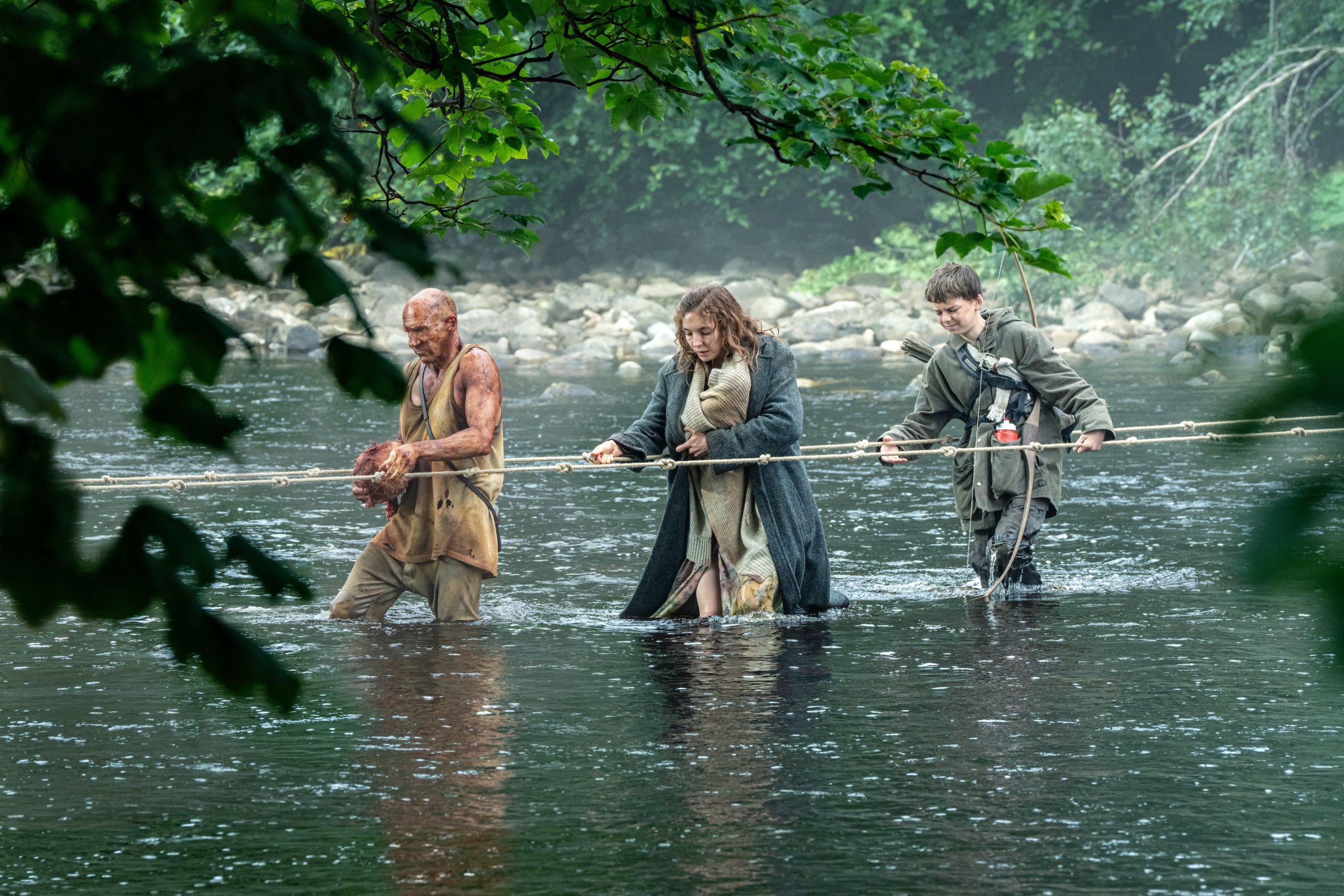 Spike’s a thoughtful sort, bringing food to his bedridden mother, Isla (Jodie Comer), and weighing every choice carefully, from whether or not to bring a personal totem on his hunt to considering the hellish sight of an infected person hung upside-down for what looks like petty vengeance. It’s through his eyes we experience this film, becoming more of a statement on our own personal growth and how we finally see the world and the people for what they are for the first time. He’s coming out of his sheltered existence and venturing into the unknown, and not everything is as hunky-dory as he thinks. Motives, secrets, and reality itself are all revealed to him in unsettling manners, especially his estimation of his father, which dims when faced with how much Jamie’s withholding from him.
As The Life of Chuck is about the moment everyone has when they realize that they owe a death with no exceptions, 28 Years Later is about how we, as children, have the veils of innocence lifted from our eyes. In Spike’s case, he sees that his father may not be the upstanding man he thought he was, and he also sees the horrors of the outside world, where death lies in wait around every corner. Through all of this, Alfie Williams essays a hard growth for Spike, turning him from eager to wary to resigned over the course of his physical and personal journey. Boyle forsakes jump scares and terror to keep us alongside Spike, rooting us in earning his forced maturity after learning that he can’t rely on the person he trusted the most. And it’s because of this that Spike engages in a dangerous endeavor to find a doctor to find out what’s wrong with Isla… and brings Isla along in desperation.
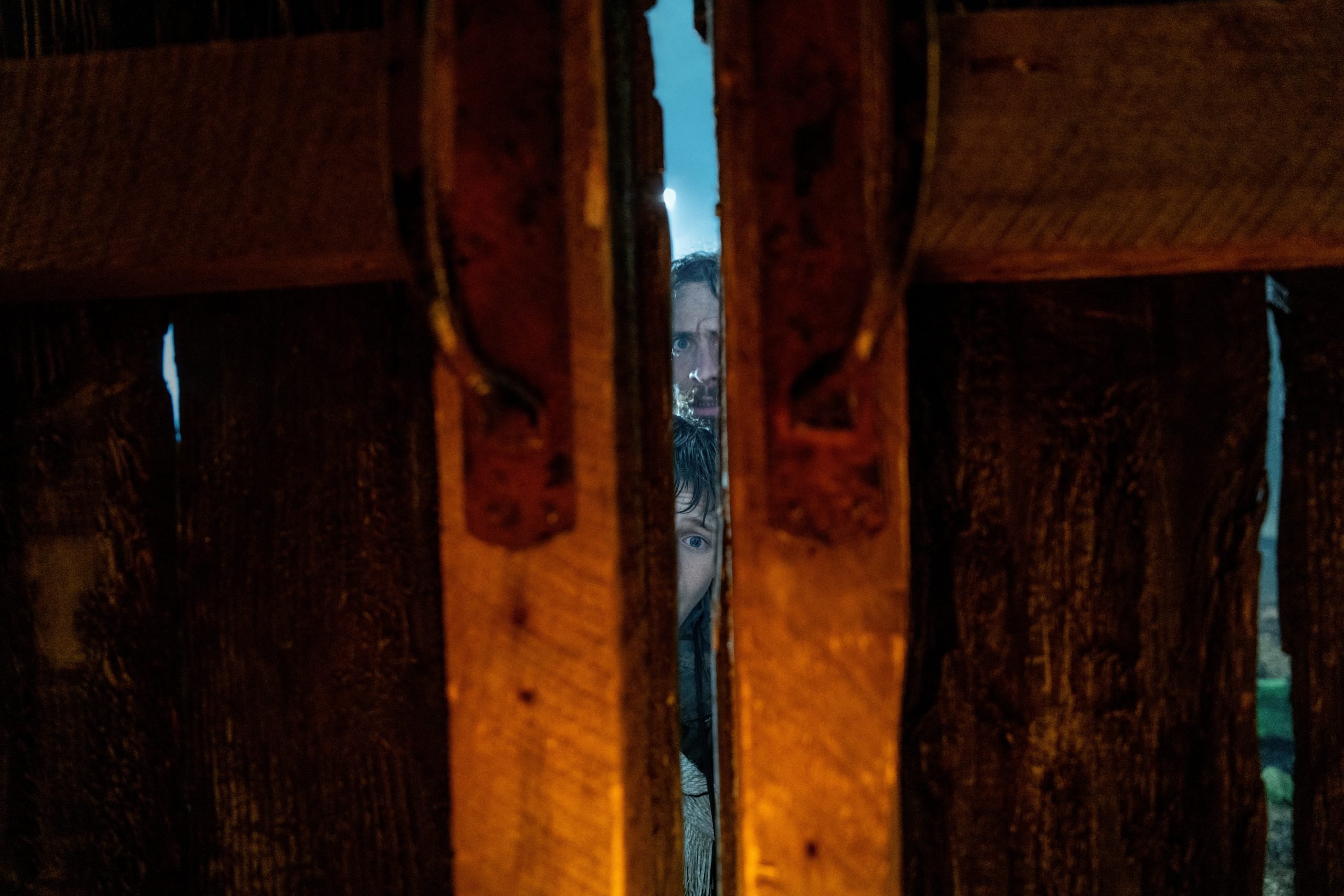 The infected are as feral as they ever were, blood-strewn and naked, literally and figuratively stripped of any vestige of humanity. Writer Alex Garland, likewise joining Boyle and cinematographer Anthony Dod Mantle in returning from the first film, also takes the opportunity to introduce a few new types of infected humans—most notably, the Alphas. Bearing superior stamina, strength, and longevity, the Alphas require a lot more than the usual methods to put them down, and they won’t stop until they’ve ripped off their target’s skull with the spine attached, similar to the Yautjas from the Predator franchise. Garland’s world-building is extraordinary, creating life out of lifeless spaces and installing hierarchies on both sides, with Spike walking carefully between the chaos engendered in both.
Danny Boyle’s return to the 28 Days Later series finds him in more pensive form, quickly establishing the horror represented by the infected before going into more dramatic, personal territory. His examination of humanity under duress here is more solemn than action-packed, injecting danger where he must, but only minimally. Death and infection are easy; the bigger horror lies in the things Spike sees from those in charge of his care and with what’s happening to his mother. The safe spaces sought in 28 Days Later and 28 Weeks Later have all dried up, and Boyle doesn’t hesitate to let us know that the safety afforded to this island village can disappear in an instant. In matching the film’s pace and tone to the characters’ lived-in settings and the ruined life that surrounds them, Boyle doesn’t want to whip us around wildly; instead, he asks us to join him on Spike’s adventure while setting us up for the next two films in the series. And if the last scene is any indication… we’re in for one hell of a ride.
