
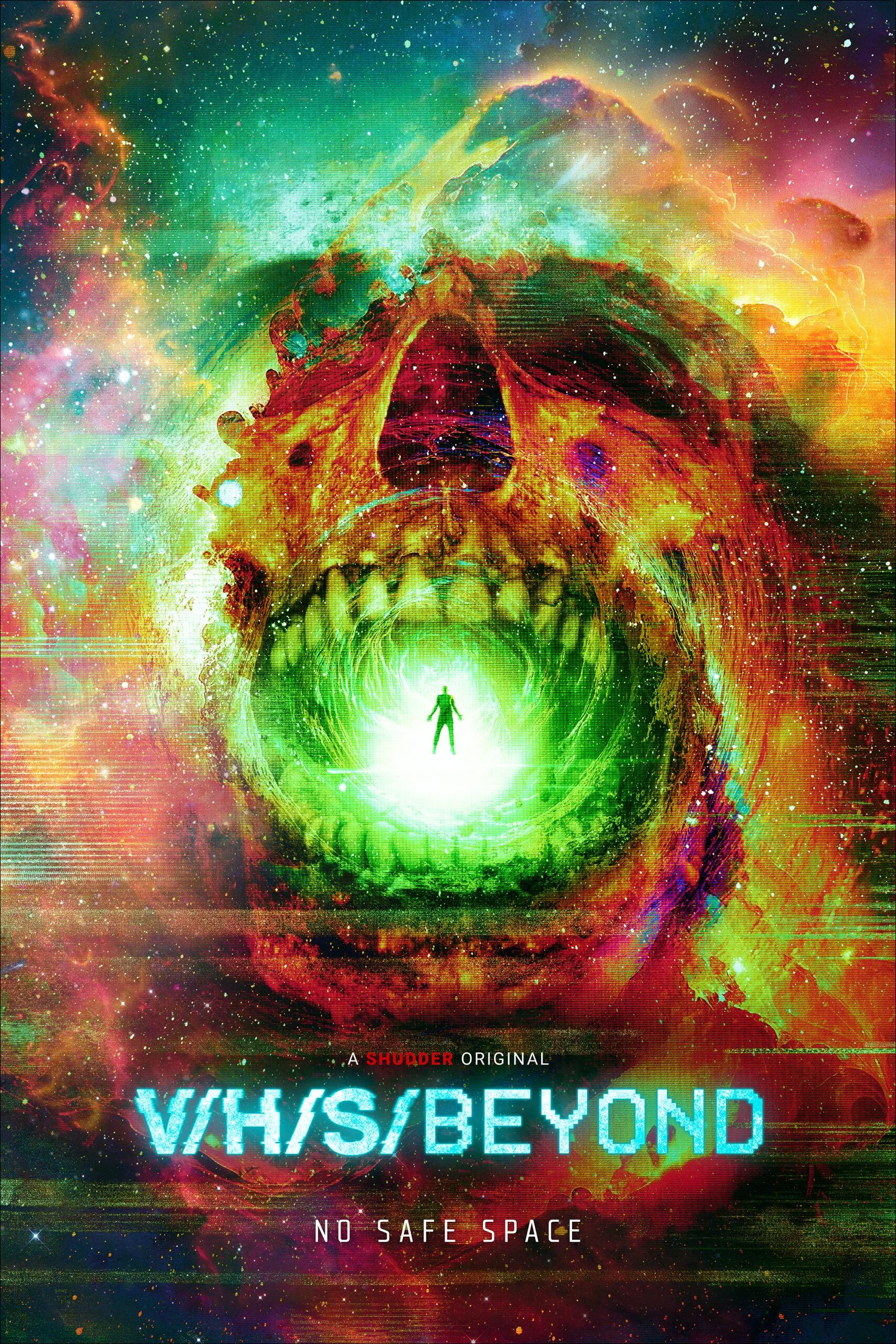
 I’m going to put this right up front: I’m a fan of the V/H/S anthologies, the same way I’m a massive fan of horror stories told around campfires and short horror collections, like Alvin Schwartz’s Scary Stories to Tell in the Dark or Stephen King’s Skeleton Crew. Quick doses of horror that build to an unrelenting climax are totally my jam, satisfyingly transitioning from innocuous actions to head-spinning twists and consequences. Even though the V/H/S series has had its ups and downs, all of the shorts in each film have been consistent more often than not in their ability to take a small swing and reap shattering rewards.
The series continues with V/H/S/Beyond, which deviates severely from the usual frame narratives with the insertion of a more somber, documentary interview-style commentary amid the found footage segments. With talking head spots by television host Mitch Horowitz (of “Alien Encounters: Fact or Fiction”), Brian Baker, and the crew from popular YouTube channel Corridor Digital (who come in more toward the second half), we’re talked to about the nature of our belief in aliens visiting the planet and whether or not a lot of purported footage – even from the government – is real or faked. Horowitz has a particularly dry, academic style which grounds the movie and serves as a calm palate cleanser between the lightning-fast horror tales spun around these segments. And boy, does it require these spots of respite between.
 As usual, those of you who cannot stomach unstable handheld camera footage being often ill-focused and never pointed quite where you want it to be, you’re not going to get anything different. But if you’re a fan or don’t mind the shakycam aesthetic, you’re in for some horrifying treats. These five stories – along with a sixth in the form of the interview segments – do their quick, nasty business and get out before overstaying their collective welcome. What’s even better about this installment is that cameras are absolutely required to tell these stories due to the activities portrayed; none of the stories needs someone looking down the barrel and saying, “Why are you filming?” – which happens a lot in this franchise.
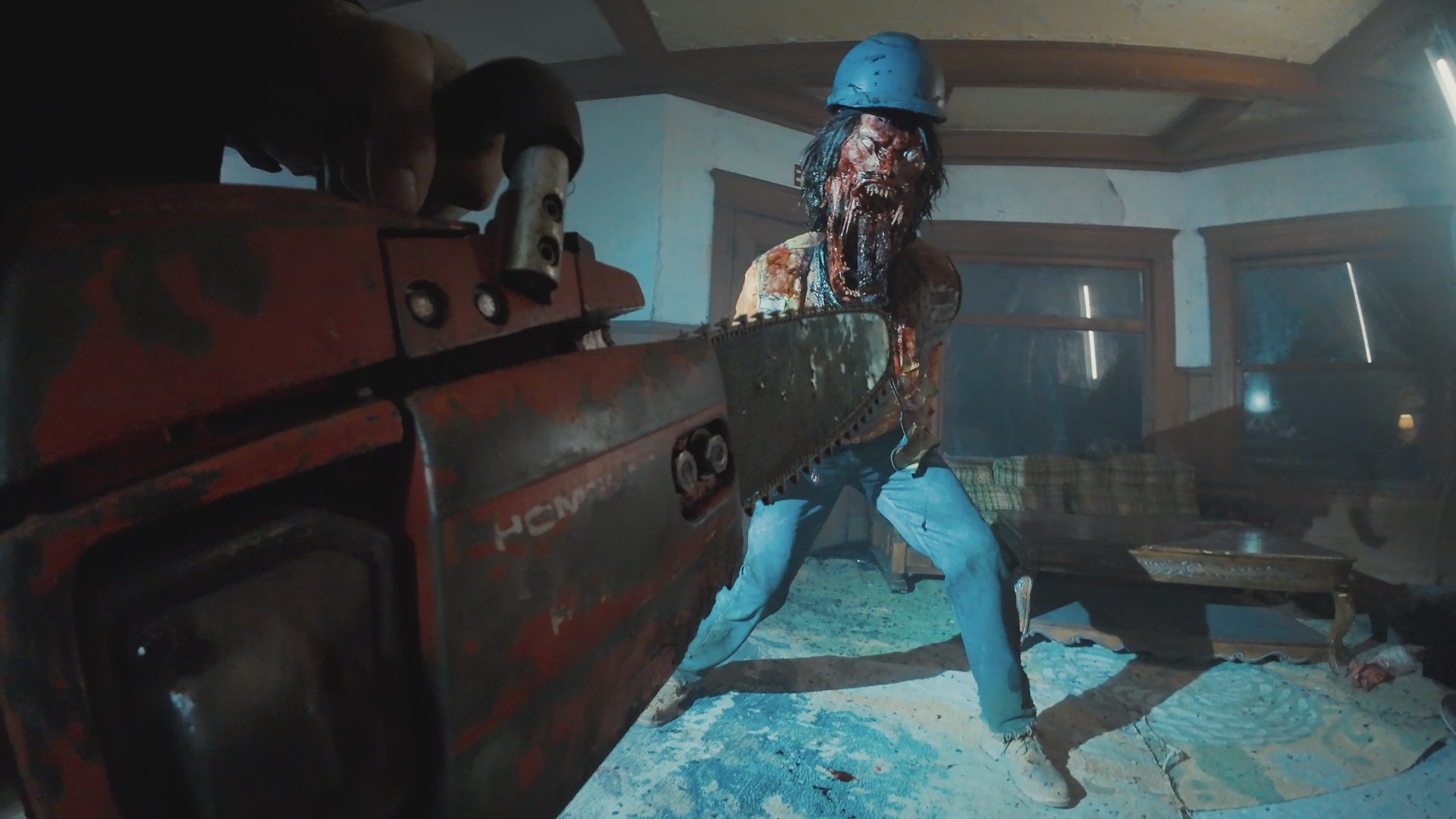
Each of these stories follows similar tracks established since the first: Set up your characters, then demolish them in the most outlandish ways possible. Prepare for eviscerations, decapitations, brutal transformations, brain removal, and plenty of limbs flying around without being attached to the bodies they belong to. Heave any expectations of traditional filmmaking out of your mind and get ready for five tales that range from the supernatural to the psychotic and everything in between.
 The filmmakers want to scare you with the unexpected, whether it’s whatever horrifying vision the person bearing the camera frantically whips around to see or the situation itself. Some want to ply you with jump scares and extreme gore (“Stork,” “Dream Girl”); others want to slow-roll you into their terror (“Fur Babies,” “Stowaway”); while some take their time with you before smacking you over the head with their final truth (“Live and Let Dive,” “Abduction/Adduction” [the frame narrative]). This combination of attacks on your senses doesn’t let up, even when the cameras lie still – they’re just waiting to show you the frightening capper just before rolling static announces the next bit of interview portions.
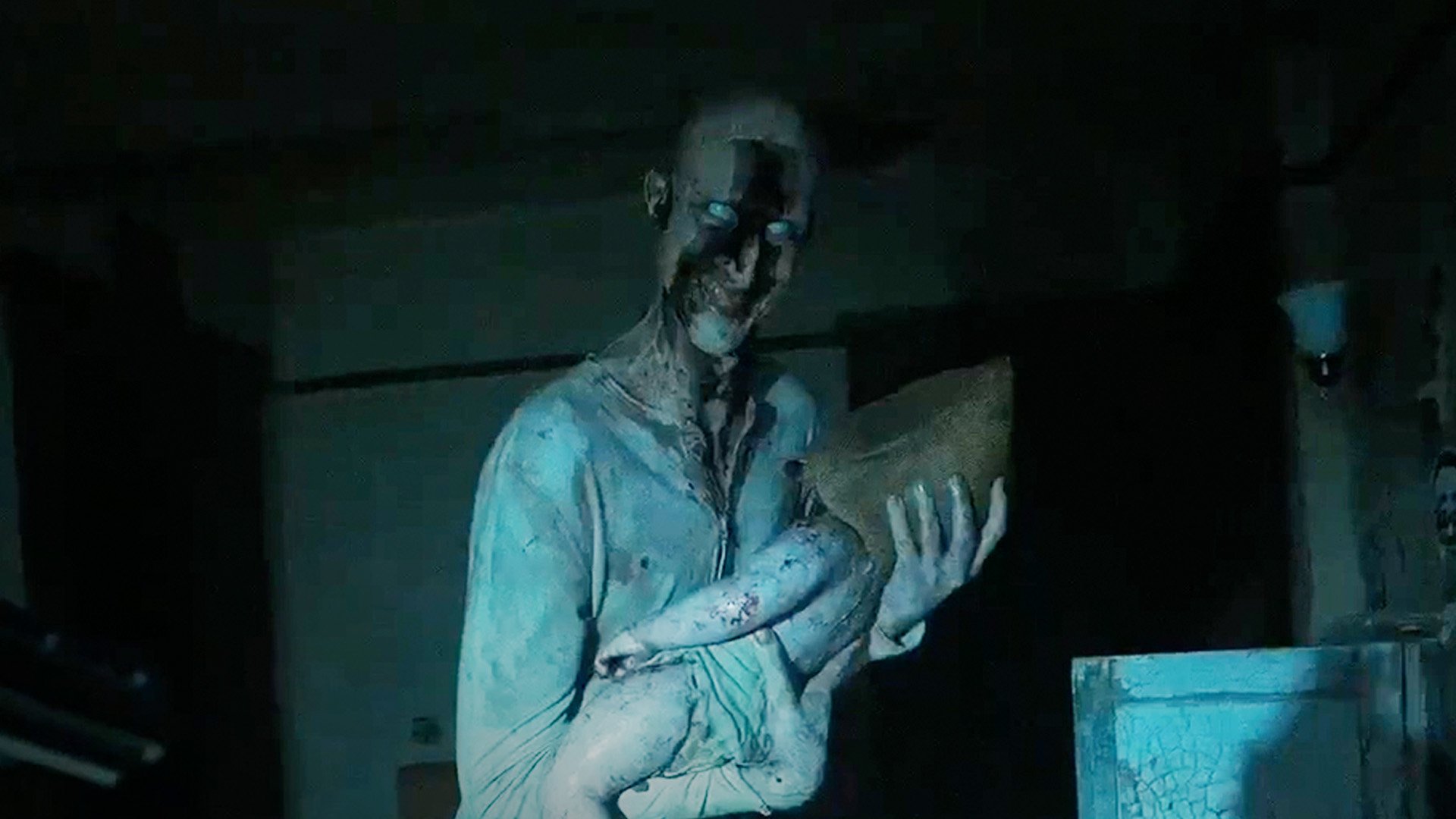
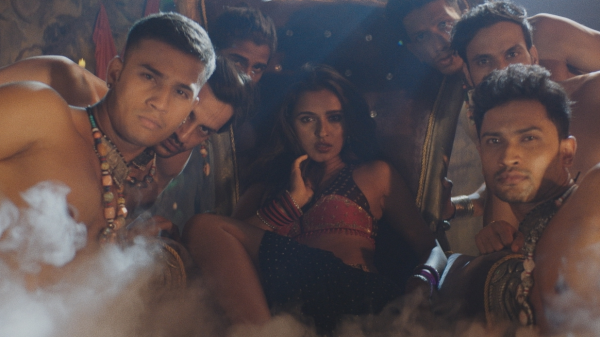
As I said, the cameras are part of the story here, not just someone lugging around an active recording device, like Hud from Cloverfield who miraculously keeps shooting everything. “Stork” features a special police detachment investigating the mysterious disappearance of 17 babies, presumably shot with each member’s state-mandated bodycams. Annoying paparazzi stringers attempt to catch intimate footage of the latest Bollywood “Dream Girl.” The partying skydivers in “Live and Let Dive” are using a GoPro to catch their freefall. Well, at least that’s their intent, right up until their plane ascent is rudely interrupted by US military jets scrambling to intercept a UFO that suddenly gets in their way. There’s a mixture of security and hidden camera footage exposing a doggy daycare owner whose obsession with “Fur Babies” borders on lunacy. Finally, the titular “Stowaway” is self-filming a documentary about lights in the sky that might give her life meaning.
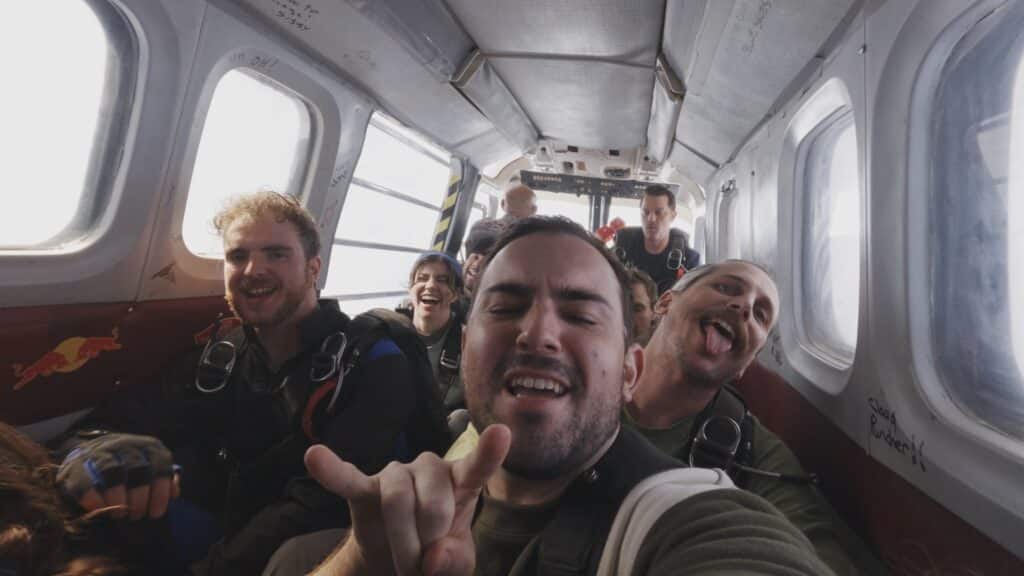 Two of these immediately stand out as some of the best stories told in these movies. The first, “Live and Let Dive,” is a freaky little jaunt that starts off with familial, jovial vibes before cranking into its wild shift toward survival. Justin Martinez keeps things tight and moving rapidly, using an actual freefall to transition between the occurrences on the plane and a suspenseful chase through an orange grove that follows. There are some truly original and grisly visuals Martinez gives us, such as a skydiver bleeding out mid-freefall and the discovery of an unlucky bastard killed by their own parachute lines. “Live and Let Dive” is exceptional work, one of the coolest and most thrilling shorts of not just V/H/S/Beyond but of the entire V/H/S pantheon.
The other highlight, “Stowaway,” provides a very unexpected emotional depth this series has never seen. This one-hander is anchored by former journalist Alanah Pearce as Halley, a woman who’s left her family behind in pursuit of what might be proof of extraterrestrial life. She’s driven herself out to a nearly deserted area on the words of interview subjects who swear they’ve seen six strange lights hovering above them before one darts off in another direction. Her confessions to the camera speak of a disquieted mind that can only be satisfied with discovering the truth about these lights, and the truth is far more devastating than she might know.
 Directed by Kate Siegel and written by husband Mike Flanagan, “Stowaway” is a lovely and astounding treasure, head and shoulders above much of what we’ve experienced throughout the V/H/S franchise. Pearce is a natural, playing a woman completely out of her depth and without a rudder. Halley’s broken and looking for something – anything – to repair her. She gets it, but it’s nothing like she wanted. In her directorial debut, Siegel takes care to help us understand Halley’s pain, especially after she discovers there’s something else on the tape she’s using; Siegel allows us the time to get to know Halley before speeding her toward shocking consequences.
With seven installments (and two feature-length spinoffs) in this 12-year-old series, you’d think the formula would be tiresome. Instead, the rocking and rolling V/H/S/Beyond proves there are plenty more stories to tell in this format, from the short and sharp shocks of more action-oriented fare to the surprisingly humanistic and touching approach to horror that Siegel takes. While the quality varies from piece to piece, they’re all in service of sharing a little campfire story with the twist endings that we loved hearing as kids. Each director and writer packs as much as possible into their chapters, grabbing us and shaking us around for the few minutes they have our attention and letting us go just as quickly. With heavy hitters like Siegel, Flanagan, and Justin Long (sharing writing and directing credits with his brother Christian), we might just be seeing the rising of the V/H/S franchise out of obscurity and into the public consciousness.
